


Are Kashmir’s Bulbuls Becoming Less Visible?
Locals say sightings have reduced in some areas; experts link it to shrinking green spaces and changing environment.
By Sakib Majeed Mir
The sweet calls of bulbuls were
mornings. Perched on fruit trees, rooftops and garden walls, the Himalayan Bulbul-locally known as
“Bilbichur” —has long been one of the Valley’s most loved birds.
But many residents now say they are seeing these birds less often around their homes and orchards than they used to.
While the Himalayan Bulbul is not considered rare or endangered (it is classified as Least Concern’), bird watchers and nature lovers believe that changing landscapes maybe affecting where and how often we see them.
“Urban expansion, cutting of old trees, and the use of pesticides in orchards reduce the insects and berries that birds feed on,” said a local bird watcher from Srinagar. “This pushes them to move away from human settlements.”
The Himalayan Bulbul is widespread across Kashmir, from the plains to the hills, and is a cheerful, adaptable species. Yet, experts say our surroundings are changing fast.
Why It Matters
The presence of familiar birds is an important indicator of a healthy
environment. Preserving trees, gardens and local biodiversity can help ensure that future generations continue to enjoy the songs of Kashmir’s bulbuls.
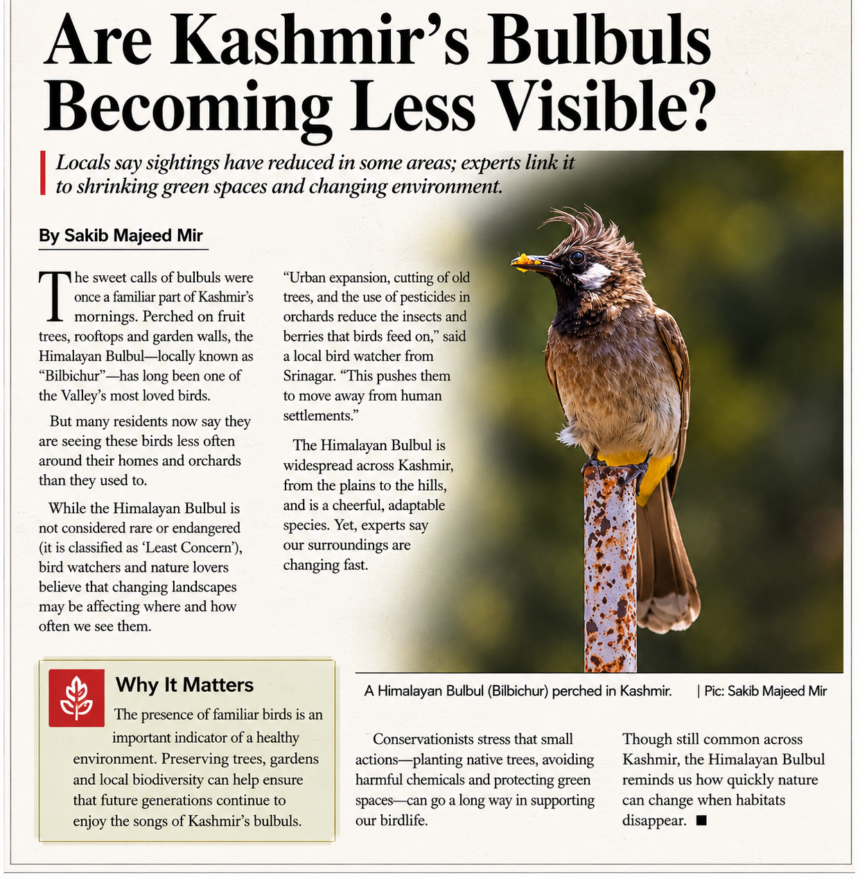
A Himalayan Bulbul (Bilbichur) perched in Kashmir.
Conservationists stress that small actions-planting native trees, avoiding harmful chemicals and protecting green spaces can go a long way in supporting our birdlife.
Pic: Sakib Majeed Mir
Though still common across
Kashmir, the Himalayan Bulbul reminds us how quickly nature can change when habitats disappear.


Leave a Comment